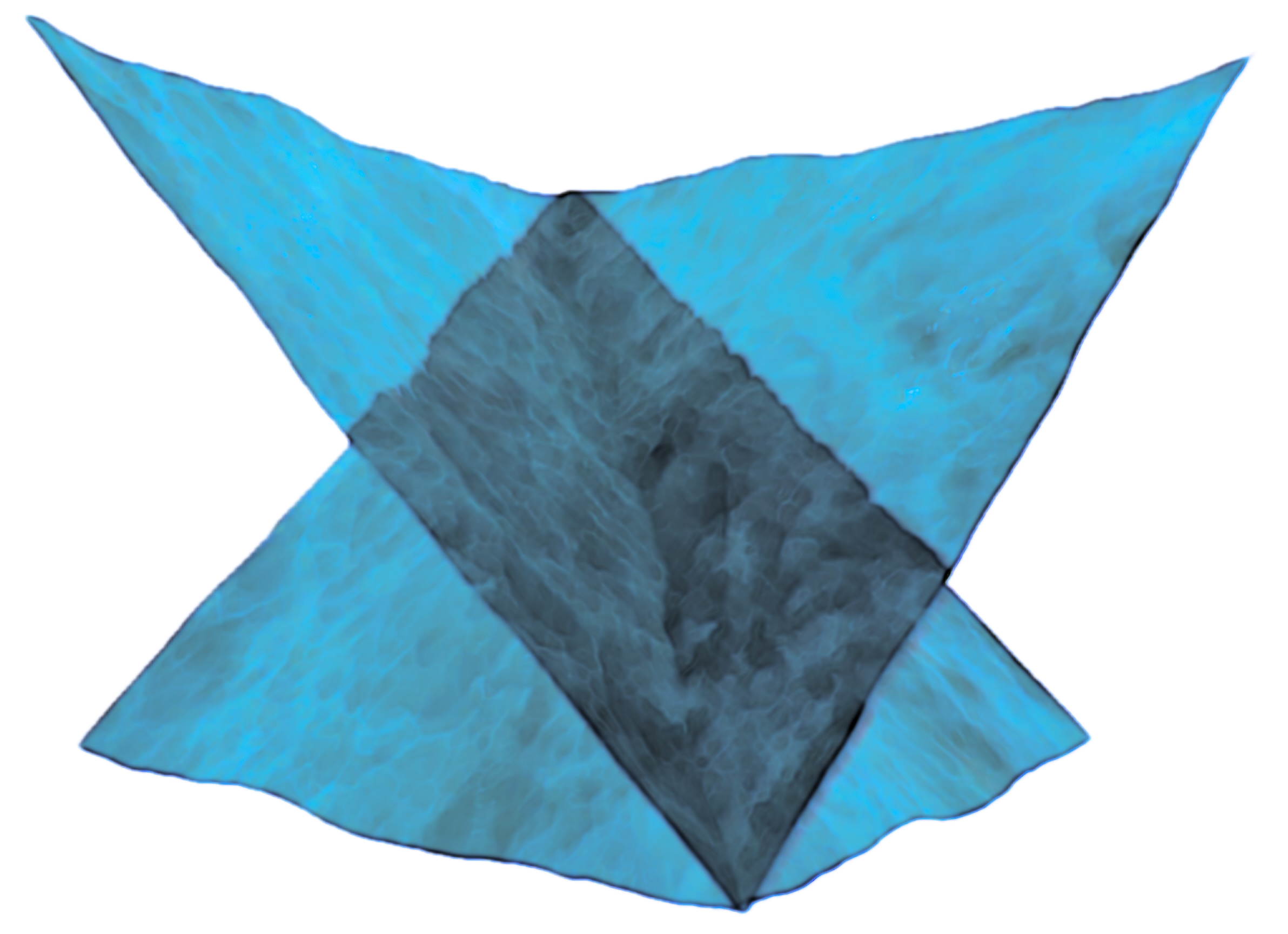
Statistical models like ChatGPT or Stable Diffusion attempt to map parts of our reality. They detect patterns in data and — without human influence — create a landscape where similar structures cluster together.
This organization is represented in what’s called the latent space: a high-dimensional mathematical space. The exact relationships between a model’s input and output are often opaque; variables lose their concrete connection to reality. The activations across the many layers of neurons are too abstract — what the model “thinks” before responding largely remains hidden from us.
But what happens if we address the model directly, without a translator? Can we gain a better understanding of the relationships within the latent space?
“drifting through 128 dimensions of a humpback whale” enables direct interaction with the high-dimensional vector space of a model trained on humpback whale recordings. Using two joysticks, visitors can navigate this space and get an immediate sense of its structure. The language of whales — still barely comprehensible to humans — is captured here in a way that is intuitively accessible. Comparable technology is being used to actually decode the vocal sounds of whales.
You are invited to explore this landscape with the two joysticks. Some of the humpback whales whose songs were used for training still swim through the oceans today. Please behave with appropriate respect.

But what happens if we address the model directly, without a translator? Can we gain a better understanding of the relationships within the latent space?
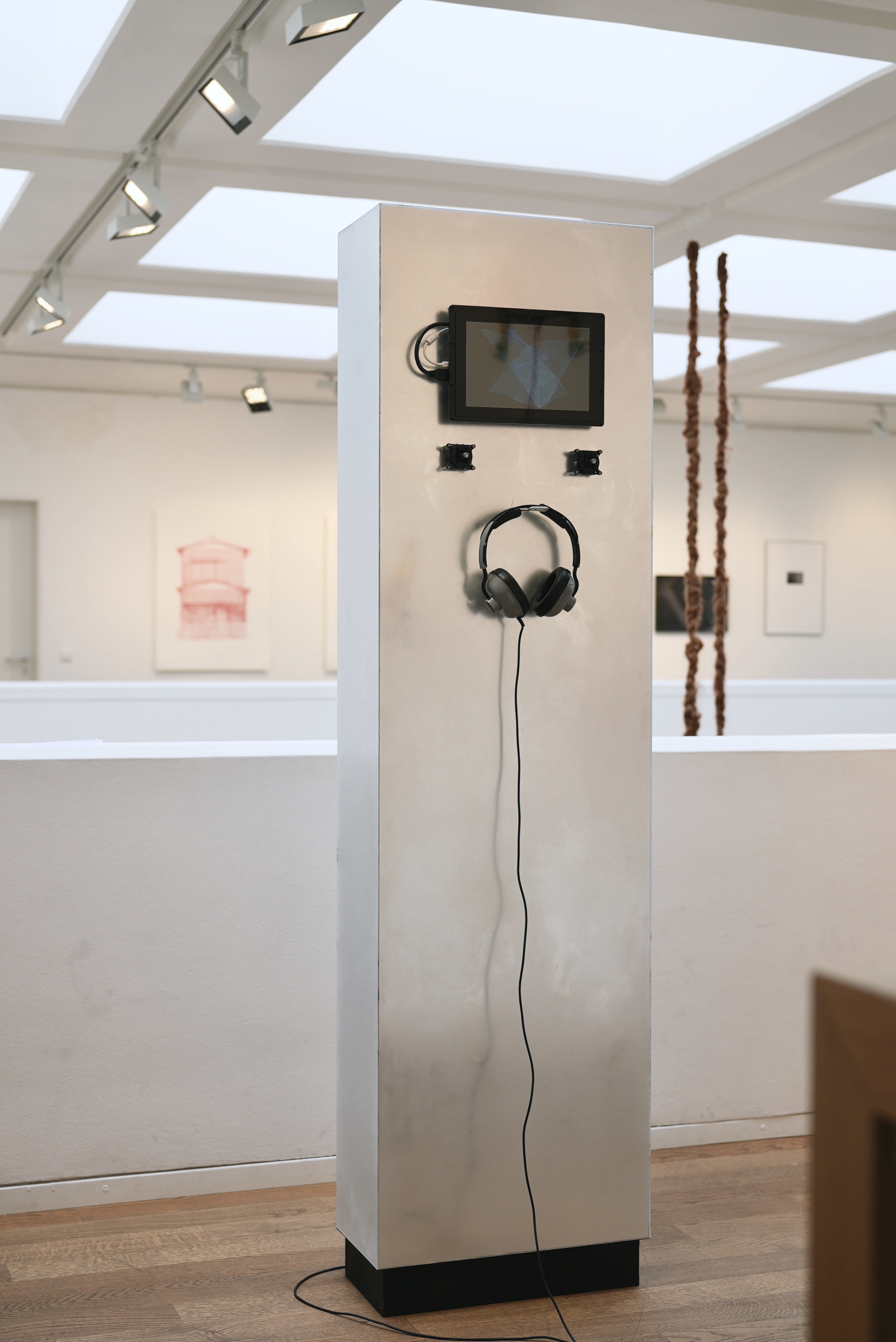
“drifting through 128 dimensions of a humpback whale” enables direct interaction with the high-dimensional vector space of a model trained on humpback whale recordings. Using two joysticks, visitors can navigate this space and get an immediate sense of its structure. The language of whales — still barely comprehensible to humans — is captured here in a way that is intuitively accessible. Comparable technology is being used to actually decode the vocal sounds of whales.
You are invited to explore this landscape with the two joysticks. Some of the humpback whales whose songs were used for training still swim through the oceans today. Please behave with appropriate respect.